As a reliable supplier of induction quenching and tempering production lines, I’ve witnessed firsthand the transformative power of these systems in the manufacturing world. Induction quenching and tempering are crucial processes in heat treatment, enhancing the mechanical properties of metals, such as hardness, strength, and toughness. In this blog, I’ll delve into the main components of an induction quenching and tempering production line, shedding light on their functions and importance. Induction Quenching and Tempering Production Line
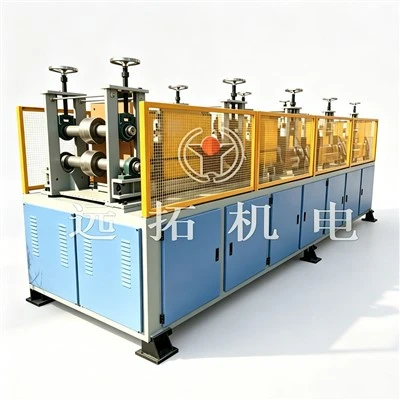
Induction Heating Power Supply
At the heart of any induction quenching and tempering production line is the induction heating power supply. This component is responsible for converting electrical energy into high – frequency electromagnetic energy, which is then used to heat the metal workpiece. The induction heating power supply operates on the principle of electromagnetic induction. When an alternating current passes through a coil, it generates a changing magnetic field. When a metal workpiece is placed within this magnetic field, eddy currents are induced in the workpiece, causing it to heat up rapidly.
There are different types of induction heating power supplies available, including medium – frequency (MF), high – frequency (HF), and ultra – high – frequency (UHF) power supplies. The choice of power supply depends on various factors, such as the type of metal, the size and shape of the workpiece, and the required heating depth. For example, high – frequency power supplies are suitable for surface hardening of small workpieces, while medium – frequency power supplies are often used for through – hardening of larger workpieces.
Induction Coils
Induction coils are the key components that transfer the electromagnetic energy from the power supply to the metal workpiece. They are custom – designed to match the shape and size of the workpiece being heated. The design of the induction coil is critical to achieve uniform heating and efficient energy transfer.
There are several types of induction coils, including solenoid coils, pancake coils, and split coils. Solenoid coils are commonly used for heating cylindrical workpieces, such as shafts and rods. Pancake coils are suitable for heating flat or disc – shaped workpieces. Split coils are designed to be opened and closed, allowing for easy loading and unloading of large or irregularly shaped workpieces.
The material used for making induction coils is usually copper, as copper has excellent electrical conductivity. The coils are often cooled with water to prevent overheating during the heating process.
Quenching Tanks and Quenching Media
After the workpiece is heated to the appropriate temperature, it needs to be quenched rapidly to achieve the desired hardness and microstructure. The quenching tank is where the quenching process takes place. It is a large container filled with a quenching medium.
There are different types of quenching media, each with its own characteristics. The most commonly used quenching media are water, oil, and polymer solutions. Water is a highly effective quenching medium due to its high cooling rate. However, it can cause severe distortion and cracking in some metals. Oil has a lower cooling rate compared to water, which can reduce the risk of distortion and cracking. Polymer solutions are a popular choice as they offer a controllable cooling rate and can be adjusted according to the specific requirements of the workpiece.
The quenching tank is often equipped with a circulation system to ensure uniform cooling of the workpiece. The circulation system keeps the quenching medium flowing, preventing the formation of hot spots around the workpiece.
Tempering Furnaces
Tempering is a heat treatment process that follows quenching. The purpose of tempering is to relieve the internal stresses generated during quenching and improve the toughness of the workpiece while maintaining a certain level of hardness.
Tempering furnaces come in various types, such as batch furnaces and continuous furnaces. Batch furnaces are suitable for small – scale production or when different workpieces require different tempering conditions. Continuous furnaces, on the other hand, are ideal for high – volume production, as they allow for a continuous flow of workpieces through the furnace.
The temperature and time settings in the tempering furnace are carefully controlled according to the type of metal and the desired properties of the workpiece. For example, a lower tempering temperature may be used to retain more hardness, while a higher tempering temperature will result in increased toughness but reduced hardness.
Workpiece Handling Systems
A well – designed workpiece handling system is essential for the efficient operation of an induction quenching and tempering production line. It is responsible for loading and unloading the workpieces onto and from the induction heating station, the quenching tank, and the tempering furnace.
There are different types of workpiece handling systems, including manual, semi – automatic, and fully automatic systems. Manual handling systems are suitable for small – scale production or when the workpieces are large and heavy. Semi – automatic systems combine manual and automated operations, providing a balance between flexibility and efficiency. Fully automatic systems are ideal for high – volume production, offering high precision and repeatability.
Workpiece handling systems can use various mechanisms, such as conveyors, robots, and hoists. Conveyors are commonly used to transport workpieces between different stations in a continuous manner. Robots can perform complex tasks, such as picking and placing workpieces accurately, and can be programmed to adapt to different production requirements. Hoists are used for lifting and moving heavy workpieces.
Cooling Systems
Cooling systems play a vital role in the induction quenching and tempering production line. They are used to cool the induction heating power supply, the induction coils, and the quenching medium.
The cooling system for the induction heating power supply and the induction coils usually consists of a water – cooling circuit. Water is circulated through the components to absorb the heat generated during operation. The warm water is then cooled in a cooling tower or a heat exchanger before being recirculated.
The cooling system for the quenching medium is designed to maintain the temperature of the quenching medium within a specified range. This ensures consistent cooling performance and prevents the quenching medium from overheating, which could affect the quality of the quenching process.
Control and Monitoring Systems
Modern induction quenching and tempering production lines are equipped with advanced control and monitoring systems. These systems allow operators to precisely control the parameters of the heating, quenching, and tempering processes, such as temperature, time, and power.
The control system typically includes a programmable logic controller (PLC) and a human – machine interface (HMI). The PLC is responsible for executing the control programs, while the HMI provides a user – friendly interface for operators to input commands, monitor the process parameters, and adjust the settings as needed.
Monitoring systems are used to collect data on various process parameters, such as temperature, power consumption, and quenching medium flow rate. This data can be used for quality control, process optimization, and predictive maintenance. For example, by analyzing the temperature data, operators can detect any deviations from the normal process and take corrective actions promptly.
Conclusion
In summary, an induction quenching and tempering production line is a complex and integrated system consisting of multiple components. Each component plays a crucial role in ensuring the efficient and high – quality production of heat – treated metal workpieces. From the induction heating power supply to the control and monitoring systems, every part must work in harmony to achieve the desired results.
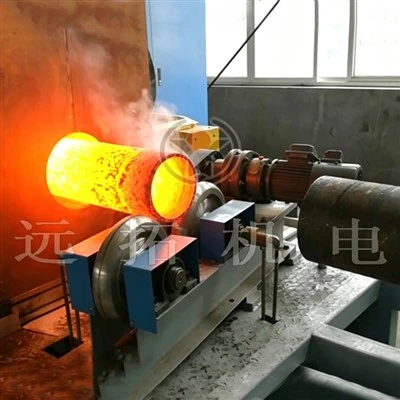
If you’re in the market for an induction quenching and tempering production line, whether you’re a small – scale manufacturer looking to upgrade your equipment or a large – scale enterprise aiming for higher productivity and quality, we’re here to help. Our team of experts is committed to providing you with the most suitable solutions tailored to your specific needs. Don’t hesitate to reach out for a consultation and procurement discussion. We’re excited to start this journey with you and contribute to the success of your manufacturing operations.
Induction Quenching and Tempering Production Line References
- Richardson, J. F. (2018). Heat Treatment Principles and Techniques. CRC Press.
- Totten, G. E., & Howes, M. A. (2016). Handbook of Quenchants and Quenching Technology. ASM International.
-ASM Handbook Committee. (2017). ASM Handbook, Volume 4: Heat Treating. ASM International.
Hebei Yuantuo Electromechanical Equipment Manufacturing Co., Ltd.
As one of the most professional manufacturers and suppliers of induction quenching and tempering production line in China, our products have good reputation in the market. Please rest assured to buy advanced equipment made in China here and get quotation from our factory. Customized orders are welcome.
Address: Yanshan Street West and Jialingjiang Road North, Economic and Technological Development Zone, Wuqiao County, Cangzhou City, Hebei Province, China
E-mail: yuantuotech01@gmail.com
WebSite: https://www.yuantuoem.com/
