Hey there! I’m a supplier in the field of Transfer Dies & Tandem Dies, and today I wanna chat about the differences in programming requirements for these two types of dies in an automated production environment. Transfer Dies & Tandem Dies
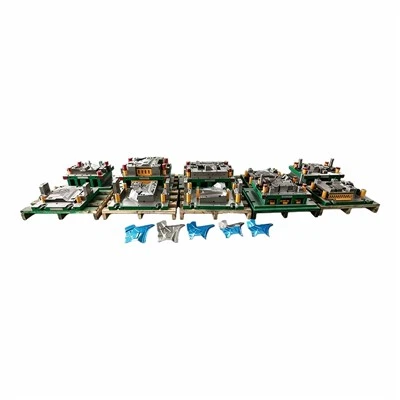
Let’s start with a quick intro. Transfer dies are a type of tooling used in metal stamping. They move the workpiece from one station to the next within the die, performing multiple operations on the part in a single press stroke. Tandem dies, on the other hand, are a series of individual dies arranged in a line. The workpiece moves from one die to the next, and each die performs a specific operation.
Now, let’s dig into the programming requirements.
1. Setup and Initialization
When it comes to transfer dies, the programming setup is relatively complex. We need to precisely define the transfer paths for the workpiece. Each transfer stage has to be coordinated with the press motion. For example, we gotta tell the system when to grip the part, move it, and release it at the next station. This involves setting up a lot of parameters, like the speed of the transfer arms, the distance between stations, and the height adjustments.
In tandem dies, the setup is a bit more straightforward at the beginning. We mainly need to focus on the sequence of the dies. We program the press to send the workpiece from one die to the next in the correct order. But we still have to make sure that the timing between the press strokes at each die is right. If the timing is off, we might end up with a poorly stamped part or even damage the dies.
2. Part Handling and Movement
In transfer dies, the part handling is a key aspect of the programming. The transfer mechanism has to be programmed to handle the part gently but firmly. We need to consider the shape and weight of the part. For instance, if the part is thin and delicate, we can’t grip it too tightly, or it might get deformed. The programming also has to account for any rotation or re – orientation of the part during the transfer process.
With tandem dies, the part movement is mainly linear from one die to the next. However, we still need to program the feeder system accurately. The feeder has to feed the workpiece into each die at the right time and position. We have to set the feed length, the feed speed, and the synchronization with the press.
3. Press Control
For transfer dies, the press control programming is highly integrated with the transfer system. We need to make sure that the press strokes are perfectly timed with the transfer movements. If the press runs too fast or too slow compared to the transfer, the part might not be stamped correctly, or it could get jammed in the die. We also need to program the press to adjust its tonnage according to the operation being performed at each station.
In tandem dies, the press control is more focused on the individual dies. Each die might have different tonnage requirements depending on the operation. So, we have to program the press to adjust its force for each die in the sequence. Also, the press has to be synchronized with the feeder system to ensure a smooth flow of workpieces through the tandem line.
4. Error Handling and Monitoring
In transfer dies, error handling is crucial because a single error can disrupt the entire transfer process. We program the system to detect errors such as a part not being properly gripped or transferred. When an error is detected, the system should be able to stop the press and the transfer mechanism immediately. We also need to set up monitoring systems to keep track of the transfer arms’ position, the part’s location, and the press’s performance.
In tandem dies, error handling is also important, but it’s more focused on each individual die. We need to monitor the die’s performance, like checking for any signs of wear or damage. If a die malfunctions, the system should be able to stop the press and alert the operator. We also have to monitor the feeder system to make sure that the workpieces are being fed correctly.
5. Flexibility and Adaptability
Transfer dies offer a high degree of flexibility in terms of programming. We can easily change the transfer paths, the operations at each station, and the part handling parameters. This makes it suitable for producing a variety of parts with different shapes and sizes. However, making these changes requires a certain level of expertise in programming.
Tandem dies are also flexible, but in a different way. We can add or remove dies from the tandem line relatively easily. This allows us to adjust the production process according to the requirements. But when we make these changes, we still have to reprogram the press control and the feeder system to ensure proper operation.
6. Safety Considerations
In both transfer dies and tandem dies, safety is a top priority. In transfer dies, the programming has to include safety features for the transfer mechanism. For example, we need to program the transfer arms to stop if they detect an obstacle. The press also has to be programmed to stop in case of any abnormal movement or pressure.
In tandem dies, safety programming is mainly focused on the individual dies and the feeder system. We need to ensure that the dies are properly guarded and that the feeder doesn’t pose any safety hazards. The press control should also have safety interlocks to prevent accidental operation.
7. Cost and Efficiency
Transfer dies usually require more sophisticated programming, which means higher initial programming costs. However, once the programming is done, they can be very efficient for high – volume production of complex parts. The ability to perform multiple operations in a single press stroke reduces the overall production time.
Tandem dies are generally less expensive to program initially. They are a good choice for medium – volume production or when the parts don’t require extremely complex operations. The programming is simpler, and the setup time is shorter, which can lead to cost savings in some cases.
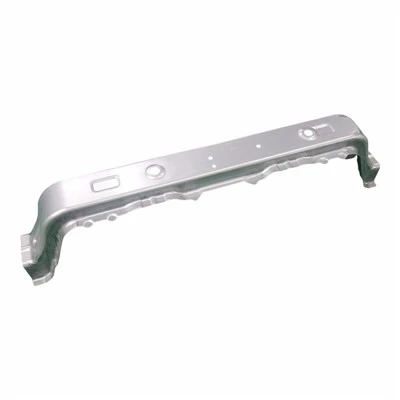
So, as you can see, there are significant differences in the programming requirements for transfer dies and tandem dies in an automated production environment. Understanding these differences is crucial for choosing the right type of dies for your production needs.
Automotive & EV Stamping Parts If you’re in the market for either transfer dies or tandem dies, or if you have any questions about the programming requirements, don’t hesitate to reach out. We’d love to have a chat and see how we can help you optimize your production process.
References
- Metal Stamping Handbook
- Automated Manufacturing Technology Textbooks
Dongguan Changdong Tool & Die Co., Ltd.
With abundant experience, we are one of the most reliable transfer dies & tandem dies manufacturers and suppliers in China. Please feel free to buy advanced transfer dies & tandem dies made in China here from our factory. Good service and quality products are available.
Address: No. 56-B, Fumin South Road, Dalang Town, Dongguan City, Guangdong Province, China
E-mail: sales@stamping-die.com
WebSite: https://www.metalstampingdie.com/
