Hey there, it’s Mia from the calcium carbonate powder team – first off, if you’ve ever sat in a lab (or even a paint factory, or a water treatment plant) and stared at a beaker of CaCO3 powder going nowhere, you’ve probably wondered the exact same thing: what’s the deal with this stuff and solvents? I get it, because I field questions about this like, every single week from folks testing powder for everything from concrete to toothpaste. Today we’re breaking down the solubility of our calcium carbonate powder in different solvents – no stuffy lab jargon, just real talk that actually matters if you’re a formulator, a spec manager, or someone who just needs this to work right. Calcium Carbonate Powder
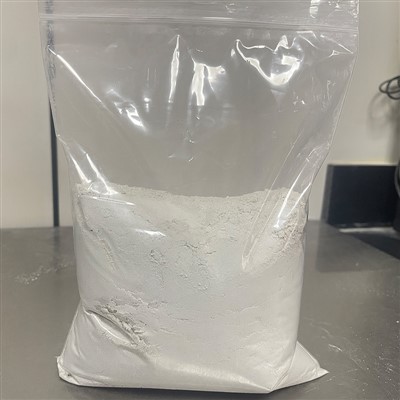
First, let’s get one thing straight right out the gate: calcium carbonate powder isn’t “soluble” in most common solvents in the way you’re thinking. Like, when you mix table salt and water, it disappears and you can’t see it anymore? That’s not how CaCO3 rolls. Most of the time, it’s barely soluble in neutral solvents – that’s why chalk (which is basically CaCO3) doesn’t melt in a glass of tap water, let alone a bottle of soda. But solubility here isn’t a black-and-white “yes/no” – it’s all about tiny, measurable amounts, and that amount shifts HARD depending on what solvent you’re using, and even how we mill and treat our powder before it ships. Because for us as a supplier, we don’t just sell generic CaCO3 – we tailor it to act right in your specific process, so knowing how it behaves in your solvent is non-negotiable.
Let’s start with the most common solvent everyone asks about: plain, old water. Yeah, H2O. Pure, neutral distilled water, no additives, pH 7 – what’s our powder’s solubility here? If we go by standard lab numbers, it’s roughly 13 mg per liter at 20°C (that’s room temp, for anyone not living in a sci lab). Wait, that’s like, super tiny – like a grain of sand dissolved in a gallon of water? No wonder you can’t see it. But hold up – that number jumps if the water isn’t neutral. If your water’s slightly acidic (think tap water with a little dissolved CO2, or even rain), solubility goes way up – to like 50 mg per liter or more. Why? Because when CO2 mixes with water, it makes carbonic acid, which reacts with CaCO3 to make calcium bicarbonate – which is actually soluble in water. That’s why hard water (which has lots of dissolved CaCO3) can leave scale on your showerhead, by the way – when the water evaporates, the bicarbonate breaks back down into solid CaCO3. For our powder, we always test solubility in your actual process water (not just lab distilled stuff) because that tiny difference can make or break things like water treatment dosing, or how the powder works in a water-based coating. If you need it to stay suspended, that slightly higher solubility in acidic water might be a problem – so we can tweak the powder’s surface coating to cut that down. If you want it to dissolve a little to bind with another ingredient, that’s a plus.
Next up: polar protic solvents, specifically alcohols like ethanol, methanol, or isopropyl alcohol (IPA). This is a big one for coatings, inks, and pharmaceuticals, because a lot of those use alcohol-based carriers. Our CaCO3 powder’s solubility here? Way lower than water – like less than 1 mg per liter, usually. We’re talking barely detectable levels, even in warm alcohol. Why the big gap? CaCO3 is an ionic compound, right? Ionic compounds usually dissolve best in polar solvents, but water’s way more polar than alcohols, plus it can form hydrogen bonds that pull apart the Ca2+ and CO3^2- ions. Alcohols have an -OH group, but their hydrocarbon tail (the long carbon chain) makes them less polar overall, so they can’t pull those ions apart as well. But wait – that doesn’t mean alcohol is a no-go. A lot of people don’t realize that even though it doesn’t dissolve, our milled CaCO3 powder has great suspendability in alcohol, because we use a surface treatment (stearic acid, usually) that makes it compatible with polar solvents. So if you’re formulating an ink that uses ethanol as a solvent, our powder won’t dissolve, but it won’t clump up either – it’ll stay evenly mixed in the bottle until you need to use it. That’s the kind of real-world stuff we test for, not just solubility in ideal lab conditions.
Then there are acidic solvents – this is where CaCO3 powder actually reacts, not just dissolves. Think of common acidic solvents used in industrial processes: acetic acid (vinegar, basically), citric acid solutions, hydrochloric acid (HCl), even lactic acid used in food or pharma. Let’s be clear: this isn’t “solubility” in the traditional sense – it’s a chemical reaction that turns solid CaCO3 into something soluble. For example, when CaCO3 hits acetic acid, it reacts to form calcium acetate, water, and CO2 gas. That calcium acetate is super soluble in water and even in some alcohol mixes. How fast does this happen with our powder? Because we mill it to different particle sizes, the surface area changes – finer powder reacts way faster than coarse powder. So if you’re using CaCO3 as a filler that needs to break down in an acidic solvent (like a soil amendment for plants, or a pH adjuster in a cleaning product), our ultra-fine ground calcium carbonate (UFGCC) will react in minutes, while our coarser grade might take hours. That’s why we never sell a one-size-fits-all powder – size matters here, a lot. We’ve had a customer who made eco-friendly cleaning tablets that use citric acid and CaCO3 to fizz; switching to our fine grade cut their reaction time by 70%, because the powder dissolved (well, reacted) exactly when they needed it to.
Wait, what about non-polar solvents? Like hexane, toluene, mineral oil – the stuff used in oil-based paints, plastics, or rubber formulations. This is where most people are shocked: our CaCO3 powder is basically insoluble here. Like, less than 0.1 mg per liter, almost impossible to detect. But again, solubility isn’t the only thing that matters – dispersibility is. For oil-based systems, we use a different surface coating (usually oleic acid, which is non-polar) so the CaCO3 particles don’t clump together in oil. Even though it won’t dissolve, it will stay suspended evenly, which is exactly what you want for a filler that makes paint thicker, or plastic more rigid. We have a whole line of oil-compatible CaCO3 grades that test great for dispersibility in mineral oil and toluene, even though they don’t dissolve. A lot of formulators mix up “insoluble” with “useless” for non-polar solvents – that’s not the case here. Our powder is a workhorse filler that doesn’t need to dissolve to do its job.
Now, let’s talk about the weird, tricky solvents that people sometimes forget about: mixed solvents, like water mixed with ethanol, or water mixed with acid, or even solvents with surfactants (like dish soap, which has surfactants that lower surface tension). Solubility here is all about the ratio. For example, a 50/50 mix of water and ethanol will have CaCO3 solubility somewhere in between pure water and pure alcohol, but not just an average – usually closer to pure alcohol, because the non-polar ethanol dominates. If you add a surfactant, like sodium lauryl sulfate, that changes things too – it can help pull the CaCO3 ions apart a little, boosting solubility in mixed solvents by 10-20% sometimes. This is a big deal for personal care products, like lotions or toothpaste, that use mixed solvent systems. We tested this recently for a toothpaste client who uses a water/glycerin mix; they were having issues with the CaCO3 settling and leaving grit. We adjusted the powder’s coating and particle size, and suddenly the solubility (or really, the suspendability) was perfect – no grit, no settling, even after months on the shelf.
Wait, let’s also clear up a myth I hear all the time: people think because CaCO3 is insoluble in neutral water, it’s useless. No way – the tiny amount that does dissolve is actually useful in a lot of cases. For example, in concrete, that dissolved CaCO3 helps fill tiny gaps in the cement matrix, making it stronger. In pharmaceutical tablets, a little solubility helps the pill break down in your stomach faster. It’s not about making the whole powder disappear – it’s about controlling that small amount of solubility to get the exact property you need. As a supplier, we track this number super closely for every grade we make. Our technical team can send you a COA (certificate of analysis) that lists solubility in distilled water, water at pH 6, even mixed solvent ratios – we don’t just guess.
Another thing that affects solubility? Temperature, weirdly enough. For water and most solvents, higher temperature usually means higher solubility – that’s why sugar dissolves faster in hot coffee than cold. But CaCO3 is a little different: solubility in water actually goes down a tiny bit as temperature rises. Like, at 80°C, it’s around 11 mg per liter, compared to 13 at 20°C. That’s a small change, but for processes that run at high temps (like plastic extrusion, or hot-poured coatings), it can matter. We take temperature into account when recommending a grade – if you’re working with heated solvents, we might suggest a slightly different surface treatment to stabilize the powder’s behavior.
Let’s get real about what this all means for you, if you’re working with our calcium carbonate powder. You don’t need to memorize lab solubility numbers – what you need to know is that solubility isn’t a fixed trait. It changes based on your solvent, pH, temperature, even how we process the powder. If you’ve been dealing with issues: clumping in your solvent, powder settling, not reacting when you need it to, or grit that won’t go away, it’s probably because you’re using a grade that wasn’t optimized for your specific solvent system.
That’s where we come in. We don’t just ship powder and disappear. Our technical team works with you to test your exact solvent, your process conditions, and the properties you need (whether that’s suspendability, reaction speed, minimal solubility, or controlled solubility) and match you with the right grade. We’ve helped everyone from small batch formulators making natural deodorant to big construction companies testing new concrete admixtures adjust their CaCO3 to work perfectly in their solvents.
If you’ve got questions about how our powder works in your specific solvent, or want to get a sample to test for yourself, don’t hesitate to reach out. We’ll send you a free sample and our technical data tailored to your solvent system, no hoops to jump through. No stuffy sales pitches, just real answers about how calcium carbonate powder actually behaves in the solvents you use every day.
Calcium Hydroxide Powder References
- CRC Handbook of Chemistry and Physics, 97th Edition, 2016. Solubility Data for Inorganic Compounds in Aqueous Solvents.
- Industrial Minerals and Rocks: Commodities, Markets, and Uses, 7th Edition, 2006. Calcium Carbonate Production and End-Use Properties.
- Zhang, L., et al. “Solubility and Dissolution Kinetics of Calcium Carbonate in Alcohol-Water Mixtures.” Journal of Solution Chemistry, vol. 42, no. 8, 2013, pp. 1522-1535.
- ASTM International Standard D1988-17, Test Method for Dispersibility of Mineral Fillers in Organic Solvents.
Chaohu Jirun Energy Conservation and Environmental Protection Technology Co., Ltd.
We’re well-known as one of the leading calcium carbonate powder manufacturers and suppliers in China, also support customized service. Welcome to wholesale high quality calcium carbonate powder in stock here from our factory. If you have any enquiry about pricelist, please feel free to email us.
Address: No. 9, north of the intersection of Weihai Road and Weili Avenue, within the industrial park of Yinping Town, Chaohu City, Hefei City, Anhui Province.
E-mail: 13305654485@163.com
WebSite: https://www.chaohujirun.com/
