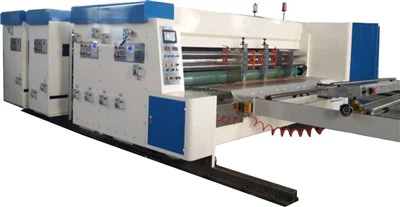
Hey there! I’m working with a corrugated box printing machine supplying business. One of the most frequent questions I get from our clients is, "How do I select the right printing plates for a corrugated box printing machine?" Well, in this blog post, I’m gonna break it down for you. Corrugated Box Printing Machine
Understanding the Basics of Printing Plates
First things first, let’s talk about what printing plates are and why they’re so important. Printing plates are like the blueprints for your printing job. They transfer the design, text, and images onto the corrugated boxes. There are different types of printing plates out there, and the most common ones for corrugated box printing are flexographic plates.
Flexographic plates are made from a flexible polymer material. They’re popular because they’re durable, can create high – quality prints, and are suitable for a wide range of inks and substrates. The flexibility of these plates allows them to conform to the surface of the corrugated boxes, which is crucial since corrugated boxes have a bit of an uneven surface.
Factors to Consider When Selecting Printing Plates
1. Print Quality Requirements
The quality of the print you want to achieve is a major factor. If you’re printing simple text and basic graphics, you might not need a super – high – resolution plate. But if you’re printing detailed images, like photographs or complex logos, you’ll need a plate with a higher dot – gain control and better resolution.
For example, if you’re printing a photo of a delicious pizza on a pizza box, you’ll want a plate that can reproduce the colors accurately and show all the details of the pizza, like the melted cheese and the toppings. High – quality plates can handle fine lines, small dots, and a wide range of colors, resulting in a more professional and eye – catching print.
2. Substrate Type
The type of corrugated board you’re using also matters. Different corrugated boards have different surface textures and porosities. For instance, a fluted board with a rough surface might require a plate that can handle the unevenness better. A plate with a harder surface and more flexible structure can be a good choice for rough substrates.
On the other hand, if you’re using a smooth – surfaced corrugated board, you can use a plate that’s optimized for producing sharp, clear prints. Some plates are specifically designed for certain types of substrates, so make sure to match the plate with the corrugated board you’re working with.
3. Printing Speed
If you’re running a high – speed corrugated box printing machine, you’ll need a printing plate that can keep up. High – speed printing can put more stress on the plates, so they need to be durable and able to transfer the ink quickly and evenly. Plates with a fast – curing ink system are often a good option for high – speed printing.
For example, if your machine is printing hundreds of boxes per minute, you don’t want the plate to wear out quickly or leave uneven prints. A plate that’s designed for high – speed applications will ensure consistent print quality even at a rapid pace.
4. Cost
Let’s be real, cost is always a consideration. You don’t want to overspend on printing plates, but you also don’t want to compromise on quality. There’s a wide range of prices for printing plates, depending on their quality, size, and features.
In general, lower – cost plates might be suitable for short – run jobs or simple designs. But if you’re doing a large – scale, high – quality printing project, it might be worth investing in more expensive, high – performance plates. You can also look for suppliers who offer good deals or discounts, especially if you’re planning to buy in bulk.
5. Ink Compatibility
The type of ink you’re using is important too. Different inks have different properties, such as drying time, viscosity, and color fastness. You need to make sure that the printing plate you choose is compatible with the ink.
For example, some inks might require a plate with a specific surface treatment to ensure good ink transfer. If you’re using water – based inks, you’ll need a plate that can work well with water – based systems. Incompatible ink and plate combinations can lead to poor print quality, smudging, or other issues.
Different Types of Flexographic Printing Plates
Now that we’ve covered the factors to consider, let’s talk about the different types of flexographic printing plates.
Digital Flexographic Plates
Digital flexographic plates are created using digital imaging technology. They offer several advantages, such as high resolution and accurate reproduction of designs. With digital plates, you can achieve very fine details and precise color registration.
The process of making digital plates is also more efficient compared to traditional methods. You can easily make changes to the design and quickly produce new plates. This makes them a great choice for short – run jobs or when you need to make frequent design changes.
Analog Flexographic Plates
Analog flexographic plates, on the other hand, are made using traditional photo – chemical processes. They’ve been around for a long time and are still widely used. These plates are generally less expensive than digital plates, which makes them a popular choice for large – scale, high – volume printing jobs.
However, the production process for analog plates is more complex and time – consuming. They might not offer the same level of precision as digital plates, especially when it comes to fine details and color accuracy.
How to Test and Evaluate Printing Plates
Before you commit to buying a large batch of printing plates, it’s a good idea to test them out. Many suppliers offer sample plates that you can use to run a test print. When you’re doing the test, pay attention to the following:
Print Quality
Check the sharpness of the text and images, the accuracy of the colors, and the overall appearance of the print. Look for any signs of smudging, blurring, or ink inconsistencies.
Durability
Run a few test prints to see how well the plate holds up. Check for any signs of wear and tear, such as scratches or damage to the printing surface. A durable plate should be able to withstand multiple print runs without significant degradation.
Registration
Registration refers to the alignment of different colors and elements on the print. Make sure that the colors are properly aligned and that there are no gaps or overlaps between different parts of the design.
Conclusion
Selecting the right printing plates for a corrugated box printing machine is a crucial decision that can have a big impact on the quality and cost of your printing jobs. By considering factors like print quality requirements, substrate type, printing speed, cost, and ink compatibility, you can make an informed choice.

Whether you choose digital or analog flexographic plates, make sure to test them thoroughly before making a large purchase. And if you’re still not sure which plates are right for your needs, don’t hesitate to reach out for advice.
Cardboard Box Making Machine If you’re in the market for corrugated box printing machines or need more information on printing plates, we’d love to have a chat with you. We’ve got a team of experts who can help you find the perfect solutions for your business. Just drop us a line, and let’s start the conversation about taking your corrugated box printing to the next level.
References
- "Flexographic Printing Technology" by Chris Pellow
- "Printing and Coating in the Packaging Industry" published by TAPPI Press
- Various industry whitepapers on corrugated box printing and printing plates
Guangzhou HS Machinery Co., Ltd.
We’re well-known as one of the leading corrugated box printing machine manufacturers and suppliers in China. Please feel free to buy cheap corrugated box printing machine for sale here from our factory. Quality products and low price are available.
Address: Xiaowu 1st Industrial Area, Xiaowu Village, Dongchong Town, Nansha, Guangzhou, China
E-mail: vipmachinery@126.com
WebSite: https://www.cartonboxsolutions.com/
